
A load can look profitable on a posting and still lose money on the road. The advertised mileage may exclude a long repositioning leg. An SUV may have modifications that change its loading requirements. A convenient delivery city may come with a receiving window that holds your truck overnight.
Before claiming a load, an auto transport carrier needs to evaluate the entire job: verified revenue, total operating cost, equipment compatibility, legal feasibility, timing, counterparty reliability, and what happens after delivery. A strong decision is not simply whether the vehicle fits an empty space. It is whether that vehicle improves the economics of a safe, workable route.
TankWorldWide is a vehicle and equipment transport marketplace acting as an agent for a licensed broker, not as the carrier or the broker itself. Carrier assignment is broker-managed; customers do not choose the carrier. For carriers, expressing interest in a load should therefore be distinguished from receiving a confirmed assignment and written dispatch authorization.
Start With a Fast Go-or-No-Go Screen
Use a short initial screen before investing time in detailed planning. If a load fails a nonnegotiable safety, equipment, or legal requirement, a higher rate does not fix the problem.
- Vehicle fit: Can your truck and trailer safely carry the vehicle in its actual condition and configuration?
- Route fit: Does the job align with your current position, committed stops, and next likely freight market?
- Schedule fit: Can you meet the pickup and delivery requirements within applicable hours-of-service rules?
- Documentation: Is the dispatching party identifiable, and are the load details and payment obligations clear?
- Coverage: Does your insurance address the vehicle, equipment, and transportation activity involved?
Classify each load as ready for detailed review, pending clarification, or declined. Do not treat missing information as a favorable answer. A blank operability field is not confirmation that the car runs.
Verify the Vehicle, Not Just the Listing
Confirm identity, dimensions, and modifications
Get the year, make, model, body style, and identifying details needed to match the vehicle at pickup. Verify the VIN before loading. For unusual, oversized, or modified vehicles, obtain reliable measurements and recent photographs rather than relying only on factory specifications.
Ask about lift kits, oversized tires, roof racks, rooftop tents, spoilers, aftermarket bumpers, lowered suspension, and loose exterior components. An accessory can change overall height, clearance, securement options, or compatibility with an enclosed trailer. Vehicle weight also matters: some electric vehicles and heavy-duty pickups consume substantially more payload than their footprint suggests.
Define operability in practical terms
A vehicle that starts is not necessarily ready to load. Confirm whether it starts reliably, moves under its own power, steers, brakes, rolls freely, and has accessible keys. Ask about flat tires, locked wheels, leaking fluids, missing components, and collision damage.
If the vehicle requires a winch, forklift, or other assistance, determine who supplies it, whether it is available at both ends, and whether the proposed method is safe and authorized. Damaged electric vehicles, suspected battery damage, or fluid leaks warrant additional safety review before acceptance; ordinary loading assumptions may not apply.
Personal belongings and spare parts also need clarification. They add weight, may move during transport, and may fall outside coverage or the agreed service. Never assume that a trunk full of cargo is included simply because it is already in the vehicle.
Calculate Revenue Against the Miles You Will Actually Drive
Use carrier compensation from the proposed dispatch terms, not the customer's retail price or a headline figure that has not been confirmed. Then calculate the actual route impact. For additional background on expense categories, see the guide to understanding cost per mile for auto transport carriers.
Relevant miles include travel to pickup, the loaded leg, stop-related detours, and any necessary repositioning after delivery. For a multi-vehicle route, distinguish miles the truck would travel anyway from miles added by this specific load. Both incremental profitability and whole-trip profitability matter.
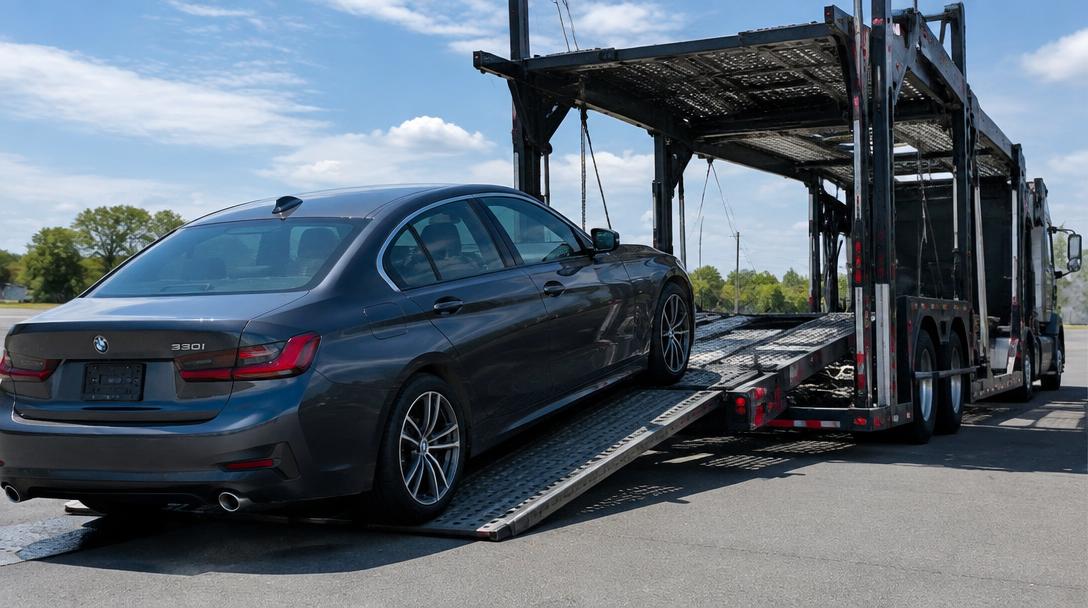
Use a transparent load-level example
Suppose a standalone load offers $1,100 in carrier compensation. It requires 80 miles to pickup, 500 loaded miles, and an estimated 40 miles of repositioning to reach a realistic next opportunity. That is 620 operating miles, making gross revenue approximately $1.77 per operating mile—not the $2.20 suggested by loaded miles alone.
| Illustrative item | Amount |
|---|---|
| Confirmed carrier revenue | $1,100 |
| 620 miles at an assumed $1.20 operating cost per mile | $744 |
| Additional tolls and parking not included above | $65 |
| Remaining amount before any excluded costs | $291 |
These numbers are hypothetical, not market rates or a recommended cost benchmark. Your cost model should reflect your equipment, fuel consumption, maintenance, tires, insurance, driver compensation, financing, and overhead. Avoid counting an expense twice. If the per-mile figure excludes owner compensation or fixed costs, the remaining $291 is not net profit.
Also evaluate time. A load that occupies two operating days and includes lengthy facility waits may be less attractive than a smaller payment completed within an existing route. Calculate expected earnings per truck-day alongside earnings per mile. For a fuller framework, use this guide to calculating auto transport profit.
Check the Load Plan and Legal Capacity
An empty trailer position does not automatically mean available capacity. Assess the proposed combination of vehicles, their placement, and the unloading sequence before confirming the job.
- Check gross weight, axle loading, equipment ratings, and applicable road restrictions.
- Verify loaded height, width, length, and clearance along the intended route.
- Confirm ramp angles and deck spacing for low-clearance vehicles.
- Ensure approved securement points are accessible and the correct securement equipment is available.
- Plan whether intermediate deliveries require unloading and reloading other vehicles.
Use actual equipment specifications and applicable requirements rather than a generic vehicle count. A route that is workable with compact cars may not be workable with several large SUVs. If measurements or weights are uncertain, resolve them before relying on that space.
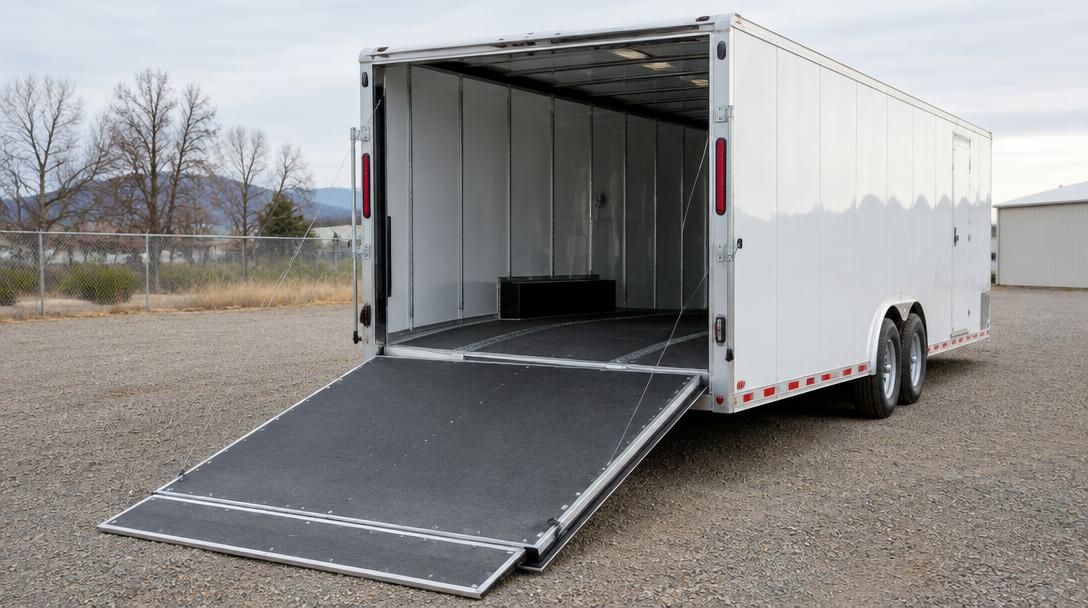
Match the requested service to the equipment as well. An enclosed-service order cannot be treated as an open-trailer load merely because open capacity is available. Confirm any special handling requirements in writing.
Test the Schedule Against Real Operating Conditions
Separate availability from appointment commitments
Ask whether the pickup date is an earliest available date, a flexible window, or a confirmed appointment. Make the same distinction at delivery. Verify time zones, weekend availability, holiday closures, and the latest arrival time that still permits loading or unloading.
Calculate driving time under realistic conditions, then add inspections, securement, fuel stops, breaks, traffic, weather exposure, and facility dwell. Check the driver's available hours and existing commitments. A schedule that works only if every stop is immediate is not a dependable schedule.
Confirm access and release requirements
Obtain exact locations rather than planning around city names. Residential streets may have low trees, tight turns, weight restrictions, or no safe space to operate a trailer. Identify a lawful, safe alternative meeting point when necessary, and obtain agreement before arrival.
For auctions, dealerships, ports, and storage yards, verify gate hours, appointment procedures, release numbers, required identification, and any access credentials. Confirm that payment holds or ownership paperwork will not block release. Determine who can resolve a problem if the listed contact is unavailable.
At delivery, establish who will receive the vehicle, sign the condition report, and make any required payment. A destination address without an available receiver is not a complete delivery plan.
Verify the Dispatching Party and Written Terms
Before accepting instructions, verify the business identity and applicable operating authority of the dispatching party through authoritative records. Confirm unfamiliar contact information independently rather than relying exclusively on a phone number supplied in a message. A recognizable business name does not prove that the person using it is authorized.
Check that the written dispatch agreement identifies the correct carrier, vehicle, route, compensation, timing expectations, and payment arrangement. Resolve mismatched company names, unexplained intermediaries, or requests to conceal who is actually transporting the vehicle. The guide to double-brokering warning signs provides additional context for these checks.
Review cancellation provisions, detention procedures, dry-run compensation, storage arrangements, and the process for authorizing extra services. These payments are not automatic. If compensation depends on notice, supporting documentation, or written approval, understand those conditions before the problem occurs.
Understand TankWorldWide's payment structure
For TankWorldWide customers, the process is a fixed instant price, a deposit paid online, and the balance paid directly to the driver at delivery. There is no escrow. Do not assume the marketplace is holding the entire transport payment or that a customer deposit is an additional amount owed to the carrier.
Before accepting an assignment, confirm the carrier compensation, the exact balance to collect at delivery, the authorized payment method, and the responsible payer. If any amount or instruction conflicts with the dispatch paperwork, resolve it with the broker before proceeding. Customers do not select the carrier; assignment remains broker-managed.
Evaluate Insurance Exposure Before Loading
Compare the vehicle and total cargo value with your policy terms and applicable limits. A certificate of insurance is useful evidence, but it does not explain every exclusion, deductible, sublimit, or condition. Seek clarification from your insurance agent or insurer when coverage is uncertain.
Pay particular attention to high-value vehicles, modified vehicles, salvage units, loading and unloading activity, unattended storage, and subcontracting restrictions. Several vehicles together can create a larger exposure than any individual unit suggests. Confirm how limits apply under your policy rather than assuming each vehicle receives a separate full limit.
The overview of auto transport insurance coverage, exclusions, and claims can help frame questions, but your actual policy controls. Decline or pause a load if its exposure exceeds what you can responsibly carry.
Plan the condition documentation
Ensure pickup conditions allow a meaningful inspection. Record existing damage and obtain clear photographs of relevant panels, glass, wheels, and visible problem areas. Note inspection limitations caused by darkness, dirt, weather, or obstructed access instead of presenting an incomplete inspection as comprehensive.
Use consistent pickup and delivery reports, with signatures or documented acknowledgment as required by your process. Good documentation supports both the customer and carrier; it does not replace careful handling or guarantee that a claim will be denied.
Consider the Next Load Without Counting on It
A delivery location affects more than this trip. Ask whether it leaves you near realistic outbound demand, suitable parking, driver needs, and your next committed pickup. A strong-paying outbound job may still produce a weak round trip if the destination requires extensive empty miles.
Run at least two scenarios: one with a reasonable follow-on opportunity and one with no immediate reload. Do not use an unconfirmed backhaul as guaranteed revenue to make an otherwise unprofitable load appear acceptable. Historical lane experience is useful, but it should not be mistaken for a booking.
For multi-car routes, evaluate space as well as distance. A low-paying vehicle that uses a difficult deck position for several days can prevent you from accepting a better-fitting job. The principles in building a profitable auto transport route help connect individual load decisions to overall truck performance.
Use a Final Acceptance Checklist
- Verify the vehicle: Identity, condition, dimensions, modifications, keys, and loading needs are confirmed.
- Validate the route: Actual miles, road restrictions, pickup access, and delivery access are workable.
- Approve the load plan: Capacity, axle loading, clearances, securement, and stop sequence are acceptable.
- Confirm the schedule: Appointments, driver hours, facility dwell, and reasonable buffers align.
- Check the economics: Compensation covers realistic costs and meets your margin requirements.
- Resolve risk and payment: Coverage, counterparty identity, collection instructions, and exception procedures are clear.
- Obtain authorization: Written dispatch and broker-managed assignment are confirmed before pickup.

Claim Only What You Can Deliver Reliably
The best load is not necessarily the one with the highest posted rate. It is the one your equipment, driver, schedule, insurance, and business can handle safely and profitably under verified terms.
When an important fact is missing, pause and ask. When a load cannot meet a nonnegotiable requirement, decline it. A disciplined review before acceptance is far less expensive than discovering an impossible pickup, unsafe fit, or unworkable payment arrangement after the truck is committed.